
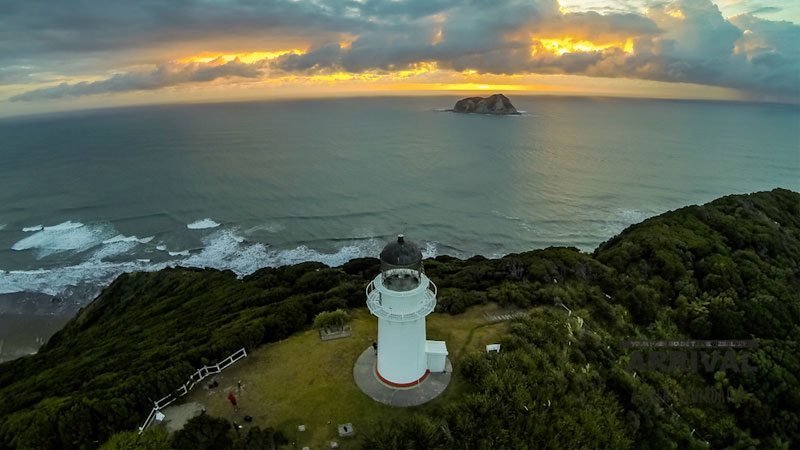
The East Cape offers a slow, peaceful
existence to those who reside there, and an equally relaxed,
enchanting place for its visitors. With few harbours and a
mountainous, wild bush interior, the Cape has been isolated for
many years until the road network was completed. And still today,
given the remote proximity of the region, few people take the
opportunity to explore what seems to be one of New Zealands
last frontiers. Inhabited predominantly by Maori, Gisborne and
the Cape region place great emphasis on the retention of their
culture and traditions - it is here you will hear Te Reo
Maori (the Maori language) being spoken fluently and freely.
The coastal road is windy tour of discovery providing
spectacular views of a wild coastline interspersed with
picturesque little bays, inlets and coves. Dozens of clear
freshwater streams flow through stunning gorges from the
mountains and in the summer months are greeted at the shoreline
by the bright crimson blooms of the pohutakawa trees. Popular for
fishing, diving and boating this must surely be one of the
countys best-kept secrets! Beautiful beaches contrast
dramatically with rugged cliffs and rocky outcrops providing the
perfect home to what seems to be an abundance of crayfish!
Surfing is popular on the beaches north of Gisborne, and the
state forest parks of Ruatoria, Raukumara, Urutawa and Waioeka
offer numerous walking tracks. The tracks afford wonderful views,
a highlight for some being an overnight stay on Mt Hikurangi to
see the first light of the new day - another spot made
famous at the time of the new millennium. Some areas of the parks
are even penetrable on mountain bike - but be warned, many
parts are not! White water rafting is available on the Waioeke
and Motu Rivers providing yet another thrilling finale to a
relaxing sector of your holiday!
Between Gisborne and Rotorua, the Urewera National Park protects
part of the largest native forest area in the North Island. Most
visitors walk the Waikaremoana Track, (sea of rippling waters),
one of New Zealands Great Walks around an amazing lake of
the same name. Birds, trout, deer and other wildlife are
plentiful in the park - take time to observe them by boat or
on the walks, which vary from half an hour to several days. The
main track is rated easy with five huts conveniently spaced along
the route - but at peak times it is wise to carry a tent!
Kayaking is also available, even a tramp-paddle option allows a
little variety and a different perspective on the Lake and
its glorious surrounds.
The Gisborne region has been settled for over 1000 years,
although Europeans did not arrive until late in the 19th century when the first whaling station was established in the
area. It was in Gisborne, however, that Captain Cook made his
first landfall on New Zealand soil in 1769, naming it Poverty Bay
after deciding it had nothing to offer! A monument to Cook can be
found at the foot of Kaiti Hill, near the spot he first set foot,
and a statue of Young Nick sits at the river mouth.
Nicolas Young, Cooks cabin boy, was the first member of the
crew to sight land - Cook named the white cliffs across the
bay Young Nicks Head. (Continue...)
|